
My Soulutions Journey
Founded early 2025, after returning to Europe from five years in California. Based near Barcelona, supporting international clients with a regional network.
Today I work with innovation leaders and teams on AI-driven concepts, connectivity strategy (Starlink’s impact on cabin equipment), co-innovation strategy, and systemic innovation — plus regional initiatives with a startup hub and university.
Three decades of experience, from industrial design roots to ecosystem strategy — shaped through collaboration, not solo genius. Soulution Lab is where experience meets experimentation: helping organizations navigate uncertainty and turn ideas into meaningful progress.
Interested in my Soulutions Journey? Enjoy below some of the stepping stone projects that shaped me and the value I bring to each project.
Humble Beginnings
After an engineering foundation I graduated as industrial designer. Linking technology to user needs has been part of my work from the early beginnings up to today.
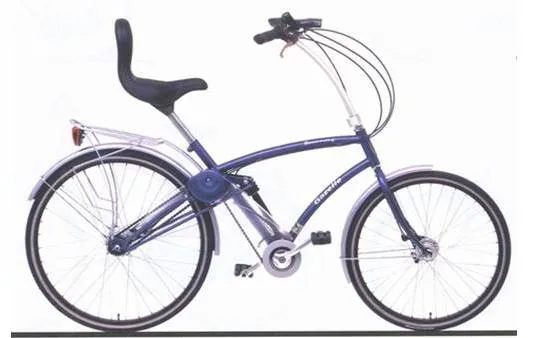
After graduating on my own product idea my first job was as design engineer in a design agency for bicycles. How Dutch can it be!
Here I spend most of my time design engineering, model making and figuring out technical principles on this Gazelle Boomerang bicycle concept.
Interactive products
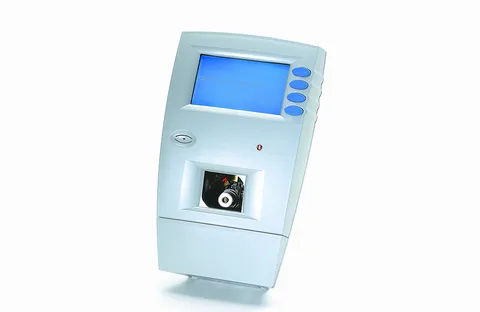
After a year in the bicycle design agency, I started to freelance as designer. One of my customers put me on a path that changed my career. Scantech, a retail technology company was a high-tech marvel in the service-oriented retail market where technology supported the shopping experience. Usability was the key driver!
Designing plastic housings for interactive mechatronics initiated my first work in interactive design. The Discovery was a Retail price checking terminal, but what mostly captured my imagination was the user-friendly interface of barcode scanning. No shopper needed any instruction testing prototypes.
Something started to grow in my imagination.
The Startup Leap
An early Internet adopter, I was fascinated by the digital dimension entering everyday life. Freelance work on the interactive retail products sparked ideas bridging the internet with real-world applications.
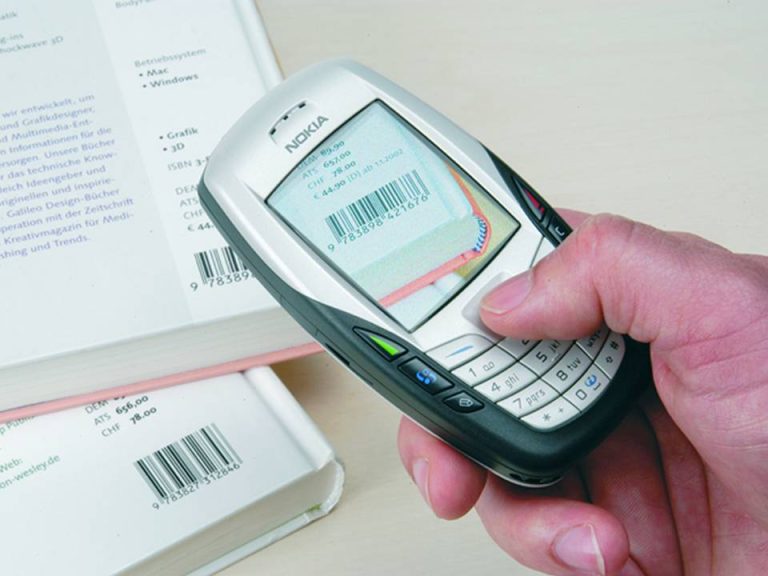
Joining Scantech as Innovation Manager in 2000, I pitched a mobile scanner concept for shopping lists, building on those ideas. Challenged by the CEO to find a “$1 scanner,” I discovered a spinoff of a camera-based retail scanner R&D project — its hardware wasn’t ready, so an engineer demoed the software on a webcam instead.
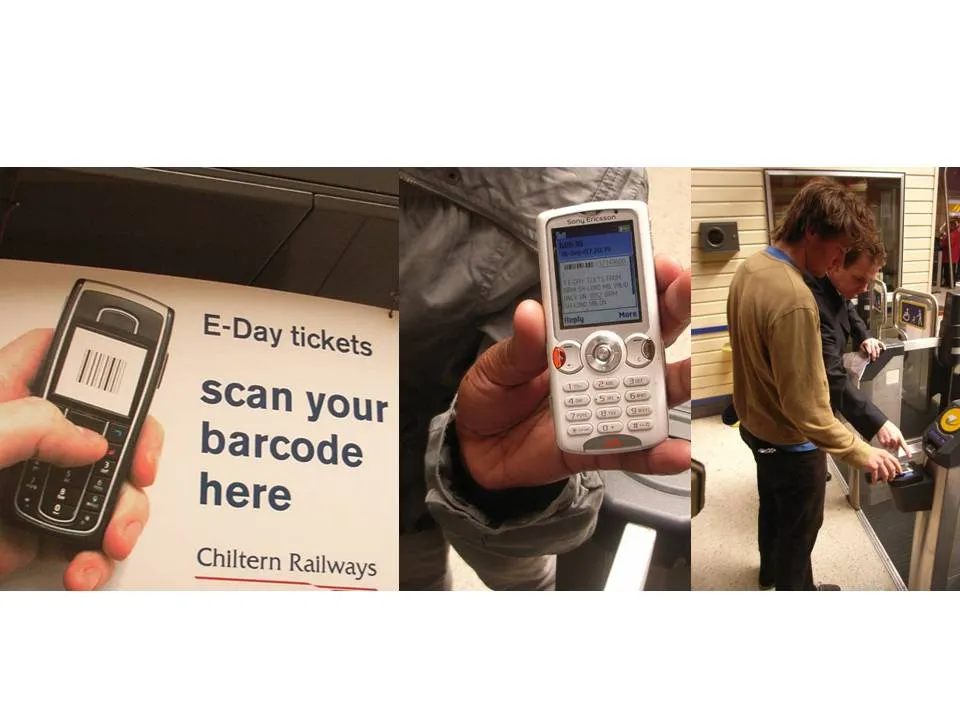
That moment sparked a software scanning application for computers and camera phones — in 2000, four years before Nokia’s first camera phone. Over the next decade I was involved in three startups: Lava Sphere (scanning technology), ScanChooseBuy (mobile price comparison), and Mbarc (mobile ticket scanning and validation).
Today, 4.5 billion phones ship with that scan software pre-installed — still a foundation of mobile interactivity 26 years later.
It was a life-changing journey, but we were early twice and got disrupted by the iPhone in 2008. Mobile barcode scanning’s real breakthrough came from NTT DoCoMo in Japan, who built dedicated phones and an ecosystem for QR code applications. The rest is history.
holistic design & innovation
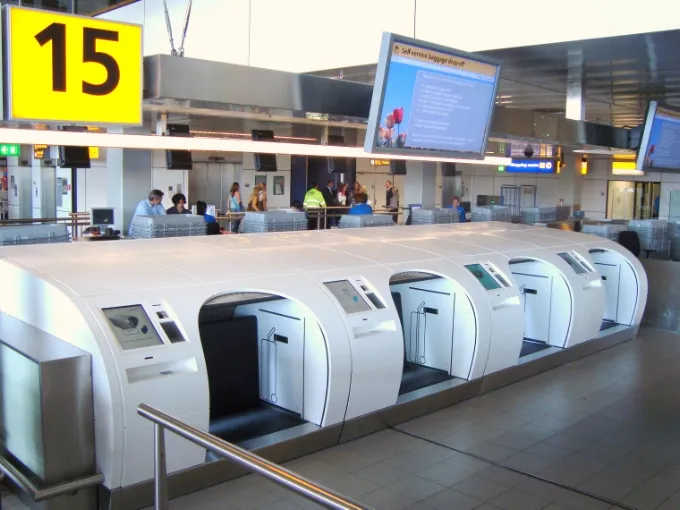
The Startup journey started and continued with experimenting with new design approaches and lean innovation. When back in the industrial design realm I got the lead in a feasibility study for a self-service Bag Drop on Schiphol Airport.
This started as a classic Industrial design project but at the first observation of self-service check-in kiosks I realized the traditional approach would not work. We experimented with passenger journey´s, persona´s and quick prototyping and testing. This holistic approach on design and early validation turned out in a blueprint framework approach for Service Design and Experience Driven innovation.
When we ended up testing the demonstrator in a lab with real passengers I realized this changed design deeply. It took at least another 5 years for Service Design to emerge but to me experimenting with design in innovation was the way ahead.
It also made me explore passenger journey´s for the first time.
Disruption and be disrupted
Disruption is often framed as startups using new technology to challenge incumbents — Clayton Christensen’s classic model. I lived it firsthand, and learned how unpredictable and unforgiving real disruption can be.
My early startups bet on mobile barcode scanning as disruptive, but the market didn’t evolve fast enough. With Mbarc, my last startup, we took a more grounded approach: building on existing behavior — print-at-home tickets — to create SMS ticket scanning and validation hardware at half the cost of the only alternative. Lean pivots evolved us into a full ticket distribution and validation ecosystem, and we were early enough to work with aviation’s first mobile boarding pass standards and major telecom pilots.
Then the market shifted overnight. The 2008 iPhone made high-resolution scanning possible on a $99 device, erasing our hardware advantage just as funding ran out. We shut down.
That moment shaped how I think about disruption: not just creating it, but recognizing when your advantage erodes and when to pivot or stop. Those ten years now inform how I help organizations navigate disruption — with ambition, but also realism about timing and ecosystems.

Change management
In industrial design and startups, change is constant. Extending service design into the public sector showed me something different: an organization resisting change at a systemic level.
Working with the Dutch social government, we focused on becoming more service-oriented for a specific, often overlooked segment: young people with disabilities. We conducted user research, built a customer journey, and trained frontline staff to better understand and support their needs.
What became clear: capability wasn’t the barrier — mindset was. Our workshops shifted thinking short-term, but the changes struggled to take hold within deeper organizational structures.
This shaped my approach to change management. Real transformation demands more than training — it requires alignment across systems, incentives, and culture. That insight proved invaluable later, in regulated, risk-averse industries like aviation, where sustainable change means navigating complexity, not just introducing new ideas.
Roadmap innovation
A short stint as a mobile experience consultant made one thing clear: I wanted an industry where digital meets physical — real products, real operations, real constraints. Tech realism, not tech positivism.
In 2012, I joined Zodiac Aerospace to lead product development and build an innovation approach within a business unit holding 75% global market share.
The stated focus was weight and cost. I approached it differently — looking beyond the product to the value it creates across ground operations and onboard service.
Aircraft equipment is highly constrained and risk-averse, where change is slow. Rather than forcing transformation, I introduced small, targeted changes over time, embedding new thinking into existing processes.
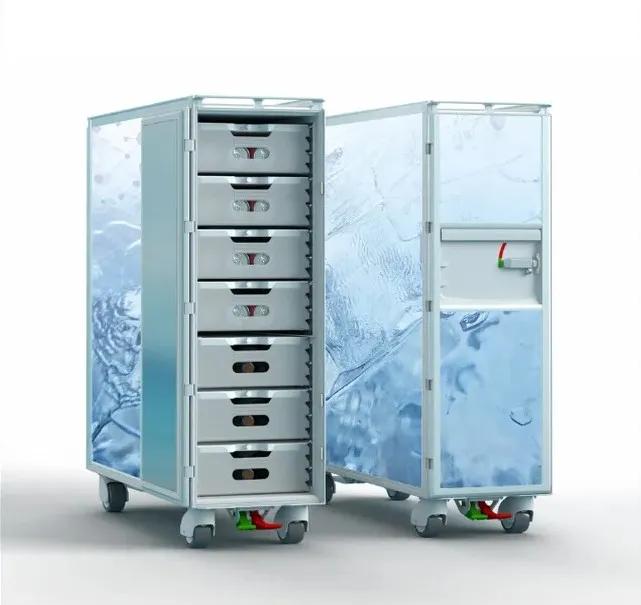
This gradual shift reshaped the portfolio. We delivered not just lighter products, but niche solutions that improved service efficiency, crew usability, and commercial opportunity — including the Cool Trolley, Retail Trolley, and Waste Trolley. The Cool Trolley won the Hospitality Award, 2018.
Experience Lab & Meaningful Innovation Playbook
After intense startup years and a lifelong exploration of methodologies, I learned corporate innovation needs something different: more structure without losing entrepreneurial energy.
Startups navigate on intuition, pivoting fast and validating with customers. Corporations also need sponsorship, budgets, and strategic alignment — without a clear framework, even strong ideas stall.
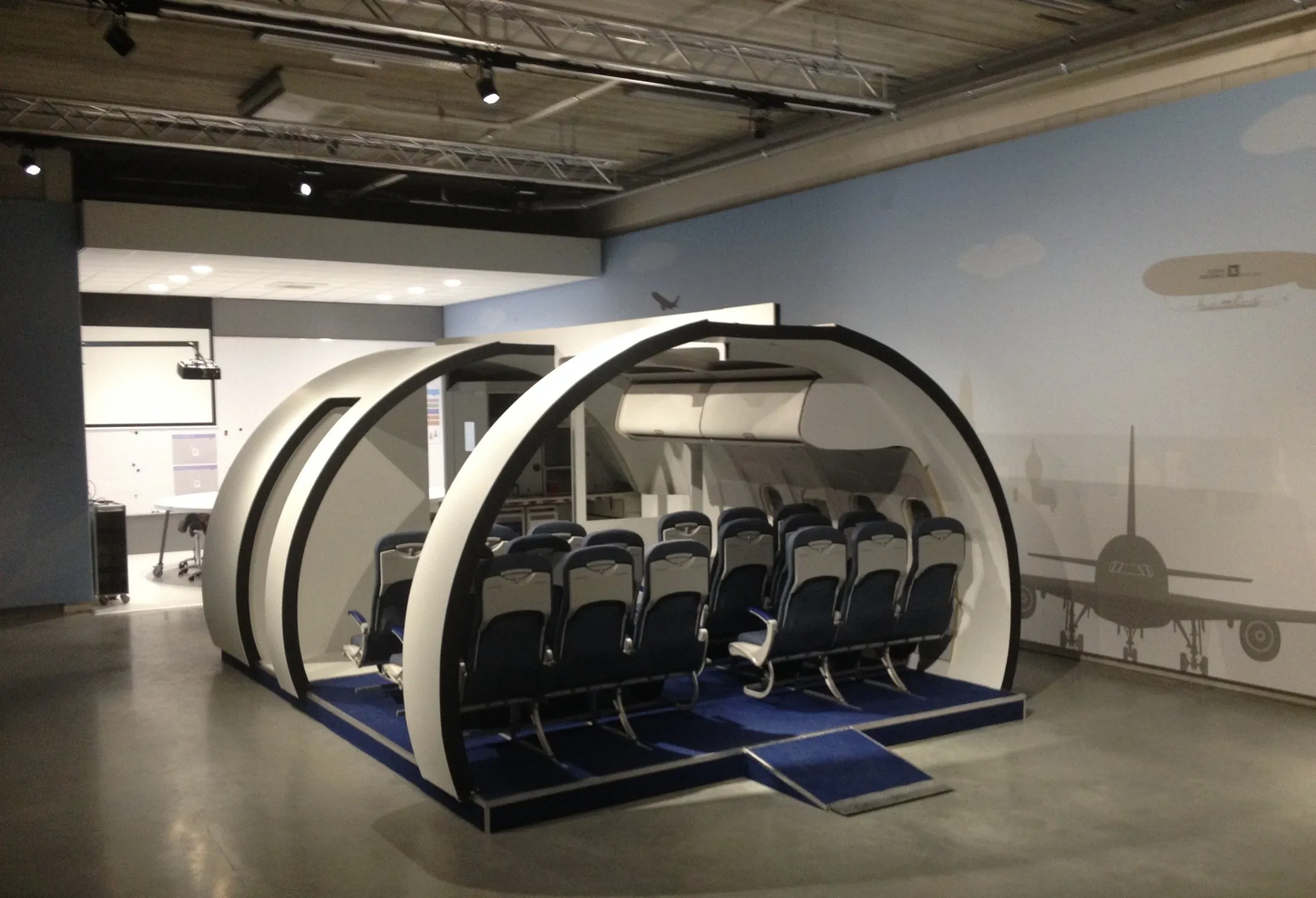
At the time, weight and cost dominated strategy. Important, but not enough to uncover new opportunities. We needed deeper user insight and a repeatable process — so we built an Experience Lab: an aircraft mock-up for research and experimentation. With TU Delft, we developed tools to observe behavior, test concepts, and validate ideas in a realistic environment.
In parallel, I translated years of intuition into a practical framework, grounded in onboard observations, airline co-creation, and ramp & catering research — not theory. This became a core capability, consolidated in 2019 into the Meaningful Innovation Playbook: tools spanning the full journey from weak-signal detection to validated demonstrators, with enough structure to guide teams while keeping design-thinking’s intuitive edge.
Discipline where needed, freedom where it matters.
Stepping Stones - From Vision to Reality
In industries like aircraft equipment, fundamental change — new concepts, ecosystems, or tech stacks — happens slowly.
We first developed a vision for connected food & beverage service: order what you want, when you want it, integrating IFEC, galley, trolley, and retail systems to challenge the push-service model.
Airlines’ reaction was pragmatic: “We like it — but first, help us understand where our equipment is.” That moment was critical, reinforcing a principle that still guides my work: customer validation beats vision.
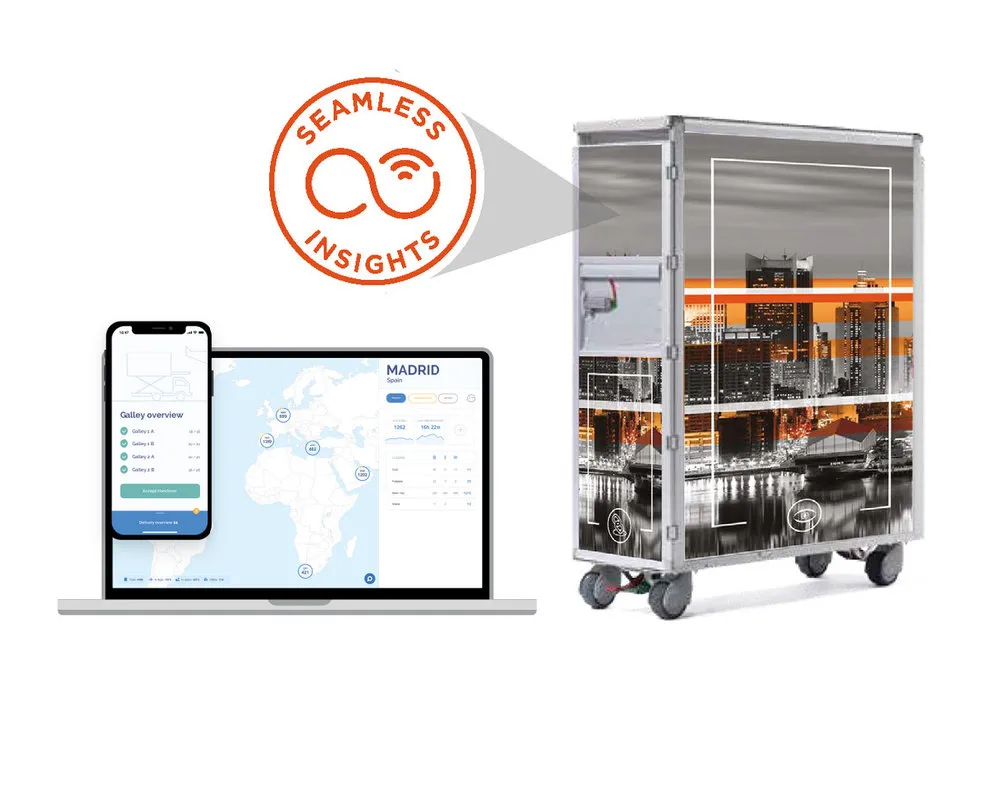
We pivoted — from a future concept to an immediate, complex problem: digitizing the catering supply chain. The result was an asset management solution combining BLE tracking, mobile devices, existing Wi-Fi, and a dashboard, enabling real-time equipment visibility across the logistics chain.
Launched in 2019 and awarded the Crystal Cabin Award in 2020, it marked a shift from standalone hardware to hybrid product–service systems — unlocking new revenue models in a hardware-driven industry.
The Connected Cabin Vision
In 2012, onboard connectivity was just emerging. Lufthansa had pioneered in-flight Wi-Fi, but the cabin was still largely a “black box,” with innovation focused mainly on entertainment.
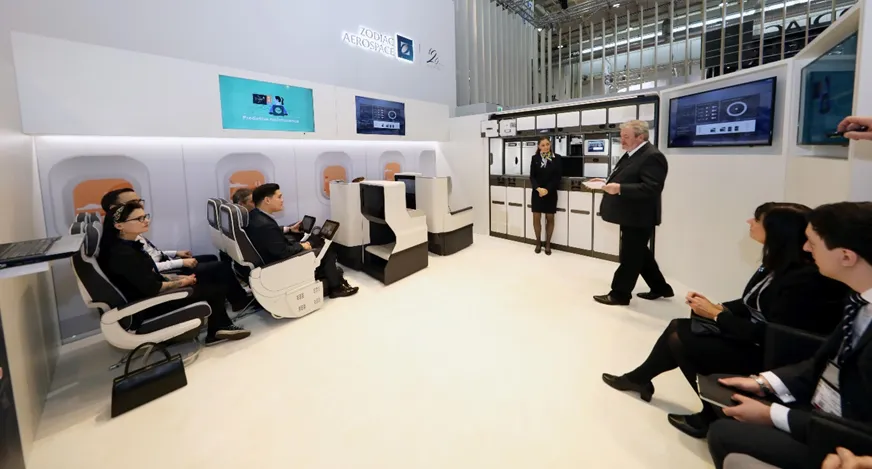
With a background in mobile and connected experiences, the opportunity was obvious: a fully connected cabin for augmented onboard experiences and services. I developed a vision for connected food & beverage service with a leading IoT design agency — passengers ordering what they want, when they want, integrating IFE, galley operations, and trolley logistics.
The simulated experience felt natural and immediately valuable. But it also showed this vision couldn’t be realized alone — it needed a broader ecosystem of partners.
Building momentum in an organization like Zodiac Aerospace, where connectivity wasn’t yet a strategic priority, required alignment across business units. A visionary animation made the concept tangible and proved a turning point: management buy-in followed, and we were tasked with a full-scale demonstrator.
The result was ICONNZ (2017) — an immersive showcase combining storytelling, simulated tech, and real use cases. We didn’t stop at the demo: structured customer interviews turned vision into a roadmap, launching a long journey of building capabilities and partnerships.
designing for trust in uncertainty
I moved to California to accelerate connected cabin innovation — but within months, COVID-19 brought aviation to a standstill.
As travel halted, focus shifted to making flying “safe” again, with many engineering-driven initiatives chasing antimicrobial materials or UV solutions. I took a different approach: instead of starting with technology, I focused on passenger perception — how people experienced health and hygiene before and during the pandemic.
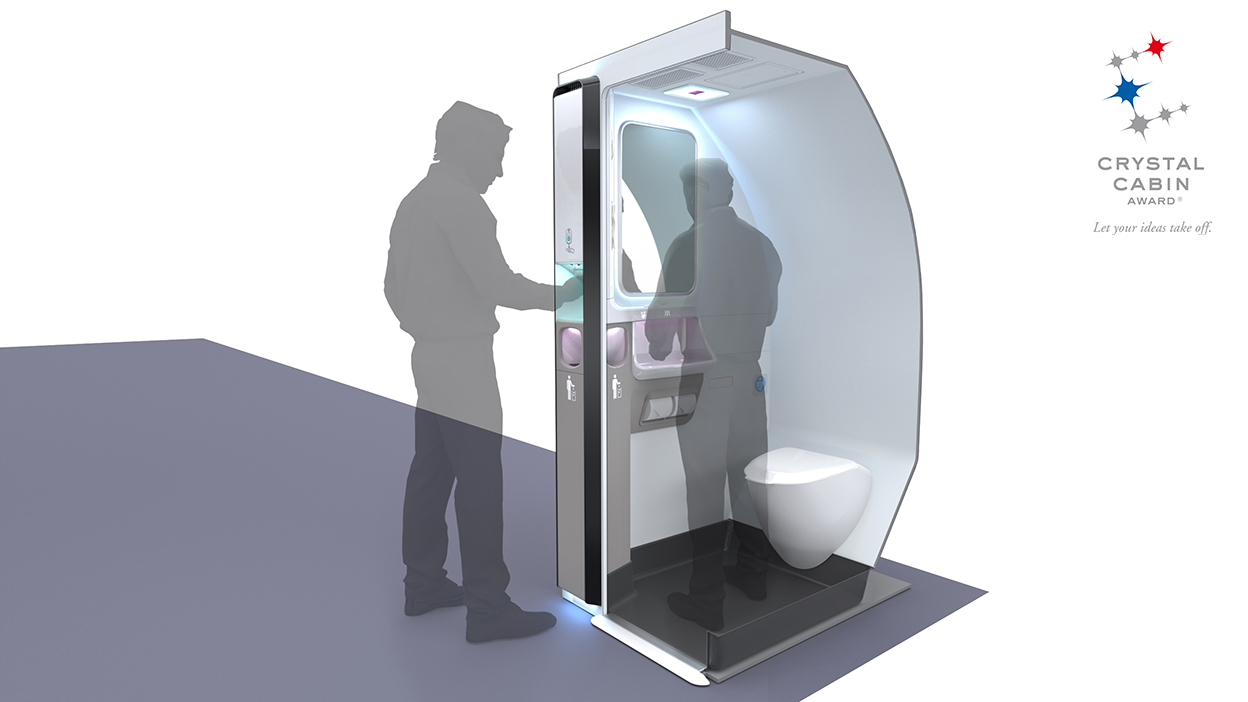
Interviews with passengers across three continents revealed a clear insight: the aircraft lavatory was already a place people preferred to avoid, and COVID-19 only intensified that discomfort. This reframed the problem — not just eliminating pathogens, but restoring passenger trust.
Working with design teams, we translated these insights into prototypes and validated them with users, while emerging evidence that transmission was airborne, not surface-based, let us deprioritize antimicrobial and UV solutions.
The result was the Beacon Lavatory, awarded the Crystal Cabin Award in 2021 — introducing a new design language for perceived hygiene and passenger reassurance, now reflected in next-generation lavatory designs.
connected ecosystems, delivered
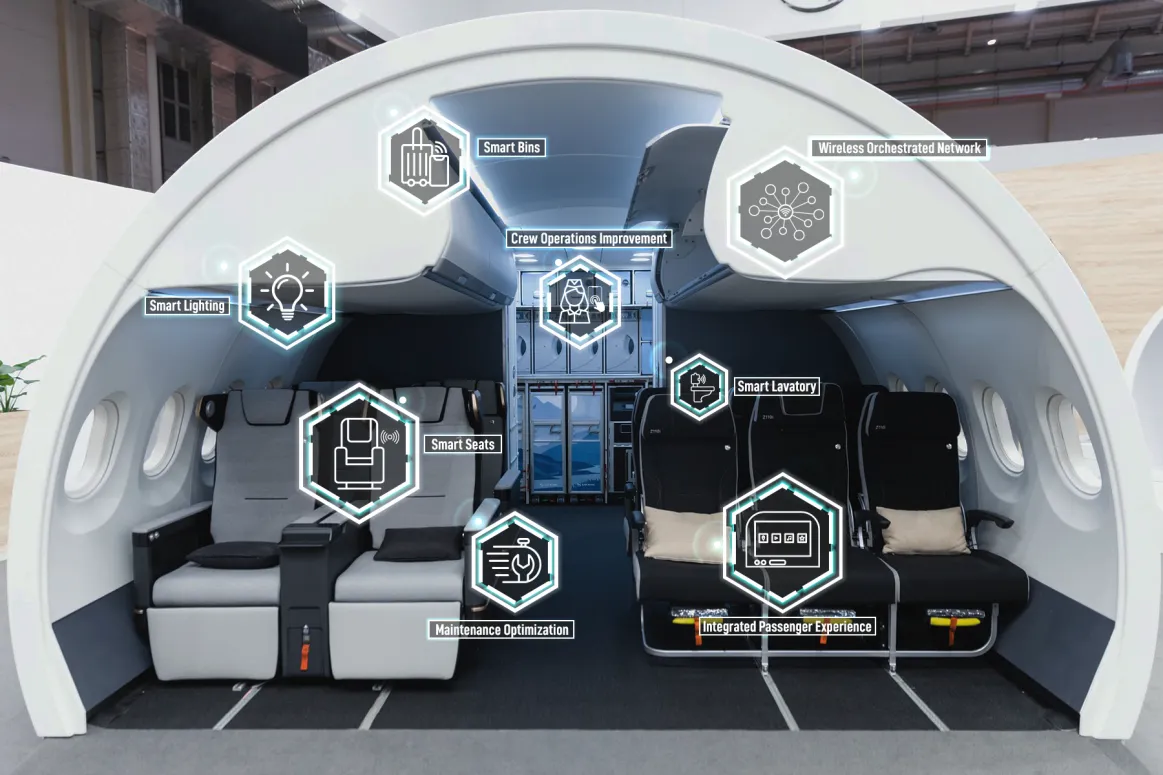
ICONNZ wasn’t an endpoint — it was the start of building a connected ecosystem across cabin products, and of changing the fabric of a risk-averse, hardware-driven industry to prepare it for a digital future.
We developed enabling technologies across new and existing systems — onboard infrastructure, secure communication, data integration — while defining use cases and business impact across real operational challenges: waste management, crew workload, digital maintenance, and turnaround optimization.
This converged in 2023 into the Connected Interiors program, focused on digital maintenance and grounded in real research — visiting maintenance facilities, shadowing onboard operations, evaluating existing platforms.
The result: connected products and services addressing one of aviation’s most critical pain points. In 2025, the program won the Crystal Cabin Award for a market-ready solution unifying the connected galley, insert suite, and first-class seat — hardware and digital services as one ecosystem. In 2026, Safran announced two airline partners to test it at 30,000 feet.